The Middle East encompasses a broad region from the Levant to the Arabian peninsula, Mesopotamia and Persia to parts of Northern Africa. Over millennia local healing traditions blended with outside cultural influences from Greek, Roman, Egyptian, Indian, and even Chinese. Bustling trade routes brought new exciting spices, incense, and herbs like saffron, frankincense, myrrh, aloe, thyme, black cumin, and fenugreek across the region.
In some areas the effect of herbal remedies were seen as magical, while other areas held herbs as a method for ritualistic cleansing, anointing, and blessing. Herbal remedies were often prescribed with prayers or religious verses.
Persian and Islamic gardens were designed both aesthetically and as a sanctuary for medicinal herbs, believing that a garden itself was medicine. As suggested by the 14th century Persian poet, Hafez of Shiraz,
When the breeze of springtime blows through the garden,
The soul returns to life,
As if the world itself were medicine.
Blending beauty for the eyes, fresh air and health for the lungs, and joy for the spirit, these gardens of the Middle East influenced cultures around the world like India’s Taj Mahal, Spanish courtyards, and formal English gardens.
A garden certainly is medicine to the soul!
Allium cepa ‘Proliferum’ – Egyptian Walking Onion
Artemisia annua – Sweet Annie
Equisetum hyemale – Horsetail
Mentha longifolia ‘Habak’ – Habak Mint
Origanum syriacum – Syrian Oregano
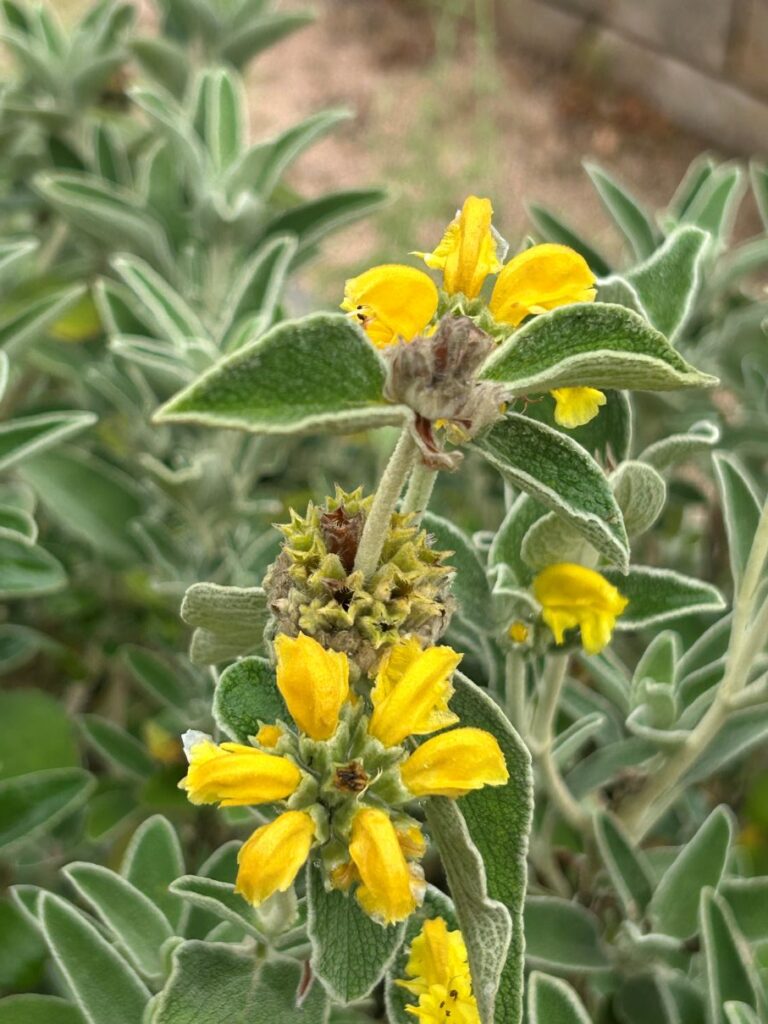
Phlomis fruticosa – Jerusalem Sage
Rosa gallica ‘Officinalis’ – Gallic Rose
Salvia x officinalis ‘Newe Ya’ar’ – Newe Ya’ar Sage
Sesamum indicum – Sesame
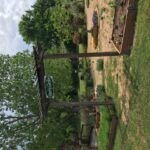
Trellis :
Clitoria ternatea – Blue Pea Vine
*Blue Pea Vine is native to Indonesia
Return to Pharmacy Garden
It is the policy of The Herb Society of America, Inc. not to advise or recommend herbs for medicinal or health use.
This information is intended for educational purposes only and should not be considered as a recommendation or an endorsement of any particular medical or health treatment. Please consult a health care provider before pursuing any herbal treatments.