Syrian Oregano, Bible Hyssop, Za’atar, Lebanese Oregano
Botanical Family : Lamiaceae
Native to : Middle East
Researched by : Phoebe Lake

Botanical Family:
Lamiaceae
This plant family consists over 200 genera including basil, mints, rosemary, sage, and lavender.
Cultivation:
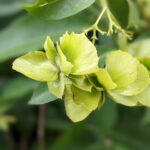
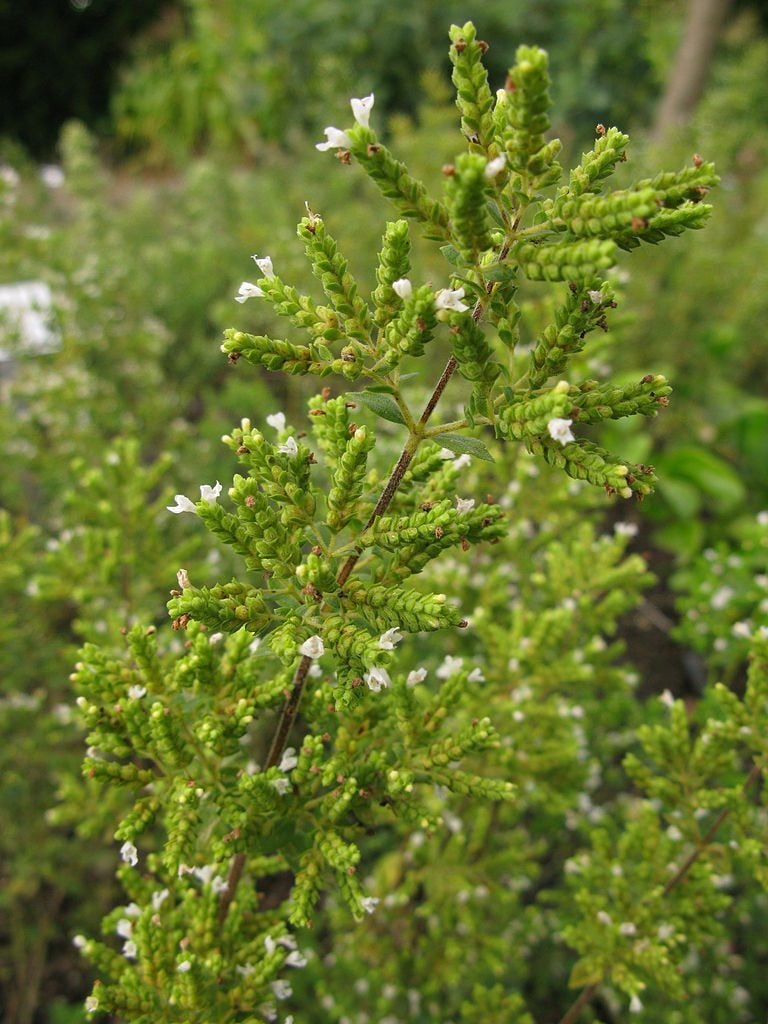
O. syriacum is a somewhat tender subshrub with erect stems. 2-3’ tall and about 12-18” wide. Hardy to zone 8. Leaves are small, opposite and gray/green. White or light pink blooms are surrounded by white or green bracts.
It prefers full sun and good drainage with little fertilizer needed. Cut back after flowers have bloomed.
One aspect of this oregano is that its growth stays upright and does not sprawl like other oreganos.
Folklore & Traditional Uses:
- The branches of O. syriacum were used to present the vinegar soaked sponge to Christ just before his death.
- Oregano has been used for thousands of years to flavor food and help health conditions.
- Internally, O. syriacum was used as a gargle for sore throat in addition to aiding respiratory problems including congestion, bronchitis, and jaundice.
- It was also used as an infusion (the plant is steeped in hot water) for anxiety.
- Externally, Syrian oregano was used as a decoction (extract using boiling water) to wash burns, bruises and skin irritation. Lotion for insect bites.
- The leaves were used as a poultice for bruises.
- Used by Egyptians for food preservation. Studies have shown that the presence of carvacrol and thymol are antifungal and antimicrobial, thus preventing food from going bad.
Traditional association of oregano was with love, healing and happiness. In the middle ages, Oregano was planted on graves to ensure the happiness of those departed.
Modern & Medicinal Uses:
In the present day, Syrian oregano is widely cultivated and is incorporated both fresh and dried into culinary preparations.
Recent studies have shown that the presence of carvacrol and thymol in O. syriacum may help in antibiotic resistance. “These properties give it great importance in pharmaceutical and medical purposes.” See NIH reference below.
Recipes:
Za’atar Spice Blend
2TB Syrian Oregano (or Greek)
2TB Marjoram (or Summer Savory or Greek Oregano)
2TB Sumac
2TB Sesame seeds, toasted
½ tsp Kosher Salt
½ tsp Cumin (optional)
In a small bowl, combine all the ingredients and transfer to a glass container for storage. Added to olive oil makes a great dipping sauce.
From urbanfarmandkitchen.com
Basil and Oregano Pesto
2 C Fresh basil leaves
3 TB fresh oregano leaves
2 cloves garlic
¼ C freshly grated parmesan chees
¼ walnuts
½ C olive oil
Salt and pepper
Combine the basil, oregano, garlic, cheese and walnuts in a food processor. With the machine running, slowly add the olive oil through the filter tube. Season with salt and pepper and process to desired consistency. Store tightly covered in the refrigerator for up to a week or freeze.
Joe Money, South Jersey Unit, Herb Society of America
References:
The Herbarist, 2004, issue 70 “Folklore of Oregano” by Karol Chandler-Ezell.
Tucker, Arthur O and Debaggio, Thomas The Big Book of Herbs
https://pmc.ncbi.nlm.nih.gov/articles/PMC8588915/
Oregano and Marjoram, An Herb Society of America Guide to the Genus Origanum, 2005
Return to Middle East Region
Return to Pharmacy Garden
It is the policy of The Herb Society of America, Inc. not to advise or recommend herbs for medicinal or health use.
This information is intended for educational purposes only and should not be considered as a recommendation or an endorsement of any particular medical or health treatment. Please consult a health care provider before pursuing any herbal treatments.