Nazareth Sage, Garden Sage, Silver Sage, Fruiticosa Sage
Botanical Family : Lamiaceae (900+ species!)
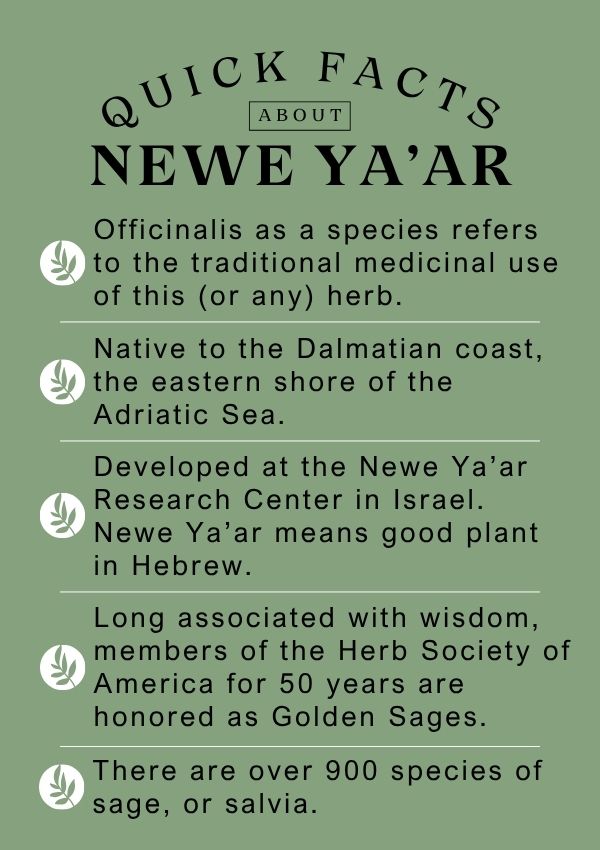
Native to : Dalmatian coast, the eastern shore of the Adriatic Sea
Researched by : Phoebe Lake
Botanical Family:
Lamiaceae
Commonly known as the mint family, and formerly called labiatae, the lamiaceae family consists of 236 genera and over 7,000 species.
These plants are found all over the world and many are familiar garden herbs such as lavender, basil, mint, oregano, thyme, rosemary and of course, sage. Interestingly, nearly all plants in this large family share the characteristic of aromatic foliage.
Cultivation:
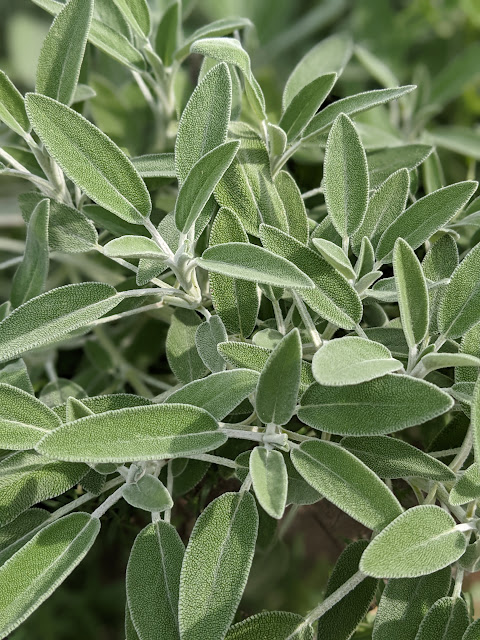
Sage is a medium size perennial, growing 2-3’ tall and wide. The stems are gray/green with simple leaves. Plant in sandy loam in a sunny, well drained area and water sparingly. Pinch growing tips to encourage branching. Usually propagated by cuttings. Many cultivars exist, but Newe Ya’ar (also sometimes referred to as Hybrid #4) endures our heat and humidity more than others.
Cold tolerance is somewhat variable, but easily to zone 8.
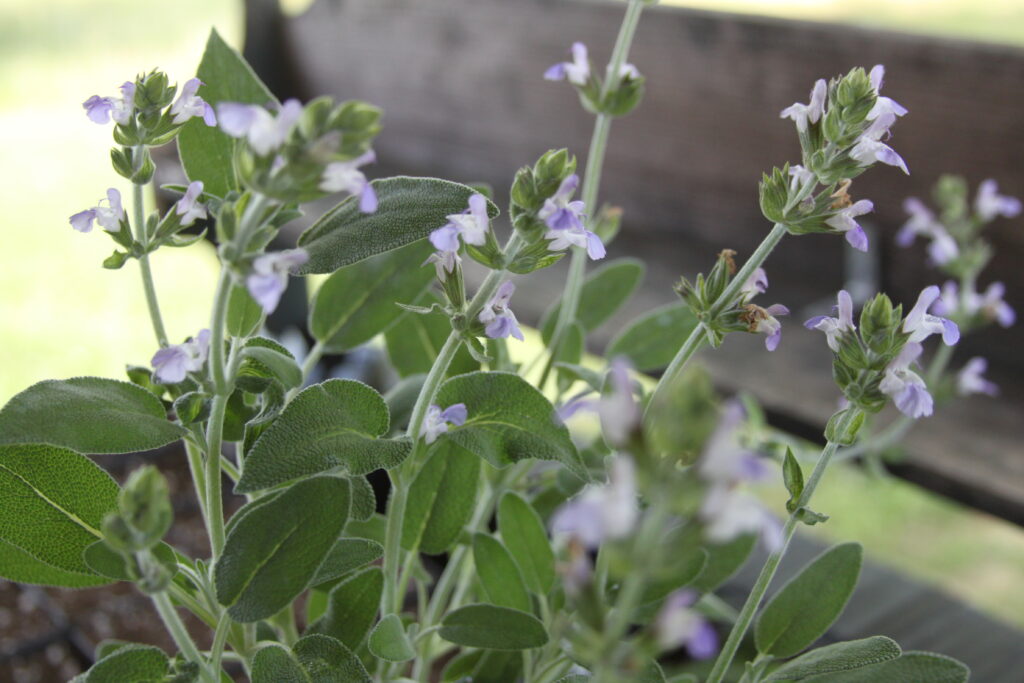
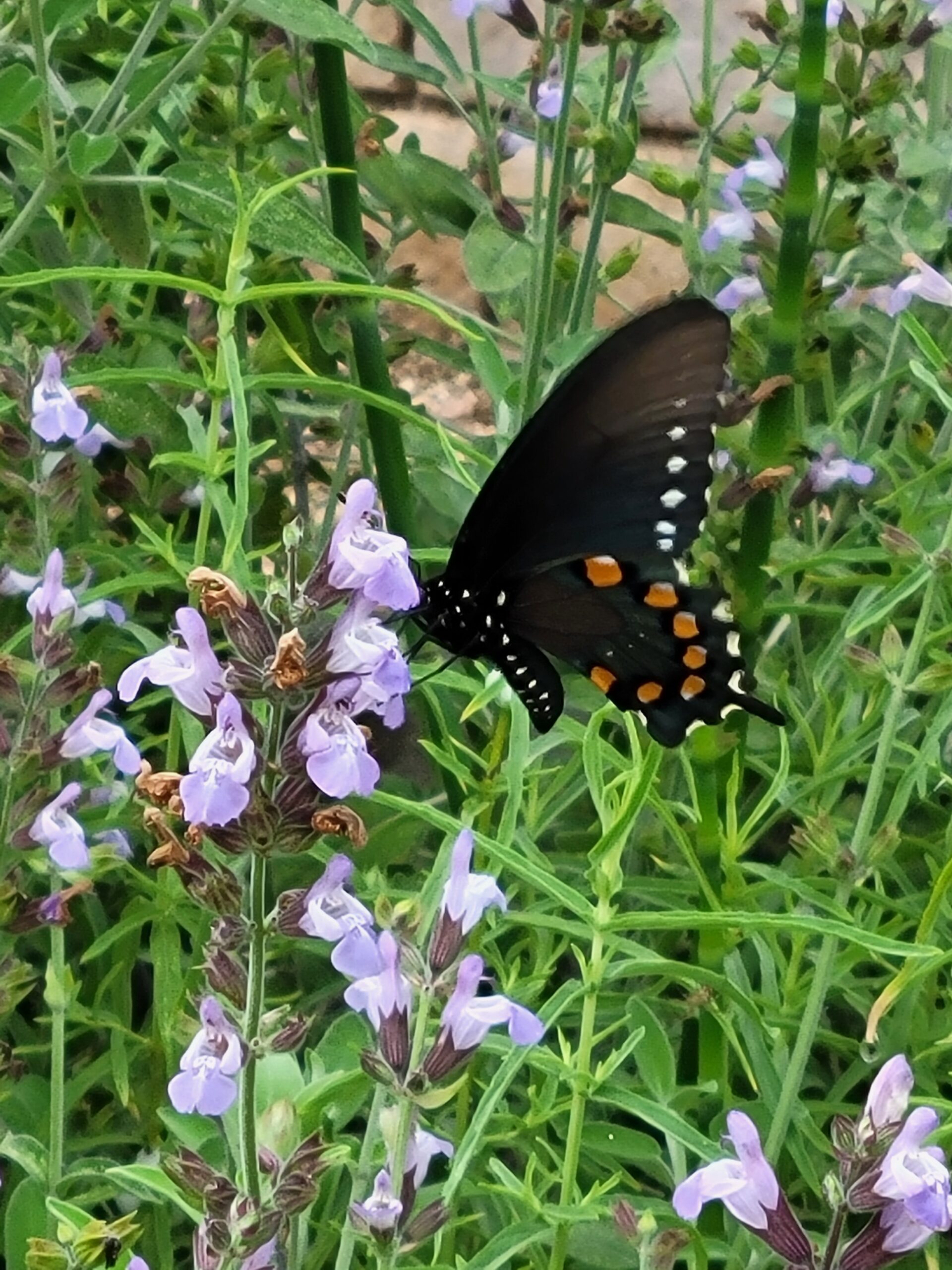
Pale blue flowers in the spring attract pollinators. Thus sage makes an attractive landscape plant.
Interesting history of this cultivar: Madalene Hill and Gwen Barclay noticed this particular sage in a bundle of purchased herbs labeled oregano. They propagated several cuttings and the identification as S. officinalis x S. fruticose was confirmed by Dr. Arthur O. Tucker.
Folklore & Traditional Uses:
The word sage comes from the Latin salvere, which means to save (think of the word salvation). This reflects the many historical and ancient uses of sage. It was used in many sacred ceremonies by the Greeks and Romans. They believed it enhanced mental acuity and to this day someone who is wise is known as a Sage (see #4 above).
It is one of the plants Charlemagne included in his German gardens. It has a long history of being grown and used by monks in the middle ages. It was used as a cure all that could help with digestion, snakebite, sore throat, epilepsy, liver disease and perspiration among others.
An old saying from that period says “How can a man grow old who has sage in his garden?”
Sage travelled from continental monasteries to England in the 14th century and by the 1600s had spread as far east as China and as far west as the Americas.
Modern & Medicinal Uses:
Like many herbs, leaves of Newe Ya’ar are best used fresh. The essential oils quickly dissipate, so replace dried leaves every six months.
Sage leaves are the classic herb for stuffing for Thanksgiving turkey. It’s often used in sausages, beans, cheeses, and marinades. Sage is included in bouquet garni, a French culinary technique of tying dried herbs together to infuse flavor into various dishes.
A tisane, or herbal tea, of sage, chamomile, and fennel can be soothing to the throat and calming to the stomach.
A rinse made of sage leaves can help darken gray hair.
The leaves act as natural insect repellents in linen closets.
Dried sage leaves are often added to potpourri while the lavender blooms make fine cut flowers.
Recipes:
Cannellini Maria
1 pound dried canellinni (small Italian white beans)
4 cloves garlic
½ c fresh Silver leaf sage leaves, divided
2 Tbs minced garlic
½ c olive oil
2 pounds plum tomatoes (fresh or canned, drained)
Salt and black pepper to taste
- Soak the beans along with 4 cloves garlic and ¼ cup sage leaves overnight in enough water to cover.
- Drain and remove garlic and sage. Add enough water to cover. Bring to a boil and cook for 1 hour.
- In a separate pan sauté minced garlic and ¼ cup minced sage leaves in ½ cup olive oil until golden.
- Add tomatoes. Cook 10 minutes until thickened. Add beans. Cook until heated through. Season with salt and pepper to taste.
Sage Corn Bread
2 strips bacon
3 tablespoons finely chopped fresh sage
1 teaspoon baking powder
1 teaspoon salt
1 ½ cups yellow cornmeal
1 egg
1 ½ cups milk
2 tablespoons melted butter
½ cup corn niblets
- Preheat oven to 450°F. Fry bacon in a 9-inch cast iron skillet until crisp. Leave grease in the skillet and transfer to oven. Crumble the bacon and set aside.
- Quickly mix the dry ingredients, bacon, and sage leaves in a bowl.
- Whisk the egg in a small bowl until frothy, then whisk in the milk. Add milk mixture and corn to the dry ingredients. Add melted butter and blend thoroughly.
- When skillet is smoking hot, add batter all at once and return to oven for 20 minutes or until top is golden brown.
Eleanor Davis, HSA Western Pennsylvania Unit
The Herb Society of America’s Guide to Growing and Cooking with Herbs
References:
Tucker, Arthur O. and Debaggio, Thomas, The Big Book of Herbs, Interweave Press, 2000.
HSA South Texas Unit Newsletter “Herb Profiles” http://www.herbsociety-stu.org/salvia-newe-ya-
ar.html accessed on 6/22/2025.
https://www.centraltexasgardener.org/resource/newe-yaar-sage/ accessed on 6/22/2025
HAS Tidewater Unit, Salvia-Herb of the Year 2001, self-printed booklet.
Return to Middle East
Return to Pharmacy Garden
It is the policy of The Herb Society of America, Inc. not to advise or recommend herbs for medicinal or health use.
This information is intended for educational purposes only and should not be considered as a recommendation or an endorsement of any particular medical or health treatment. Please consult a health care provider before pursuing any herbal treatments.