Rough Horsetail, Scouring Rush, Horse Pipes, Snake Grass
Botanical Family : Equisetaceae
Native to : Central & Northern Eurasia, incl. Greenland/Iceland/Kamchatka/Japan
Researched by : Ginger Heath
Botanical Family:
Equisetaceae
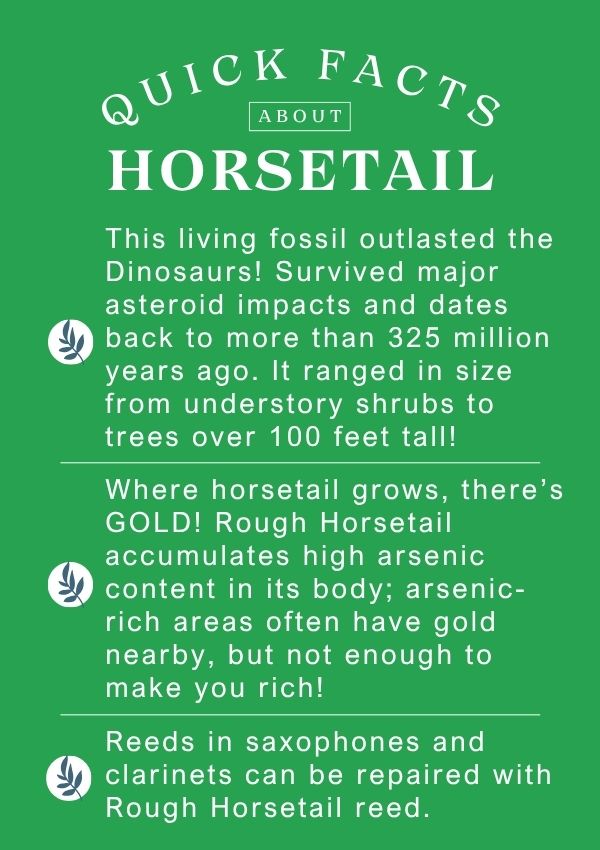
Also known as the Horsetail family, this family of ferns outlasted the DINOSAURS, survived major asteroid impacts, and dates back to more than 325 million years ago. The plants ranged from understory shrubs to trees that grew up to 100 feet tall.
Trick Question: “What does a Horsetail FLOWER look like?”
(Answer: Rough horsetail may look like the giant panda’s favorite food bamboo, but horsetails reproduce by spores and DO NOT HAVE FLOWERS as bamboo does.)
Cultivation:
Identification & Reproduction:
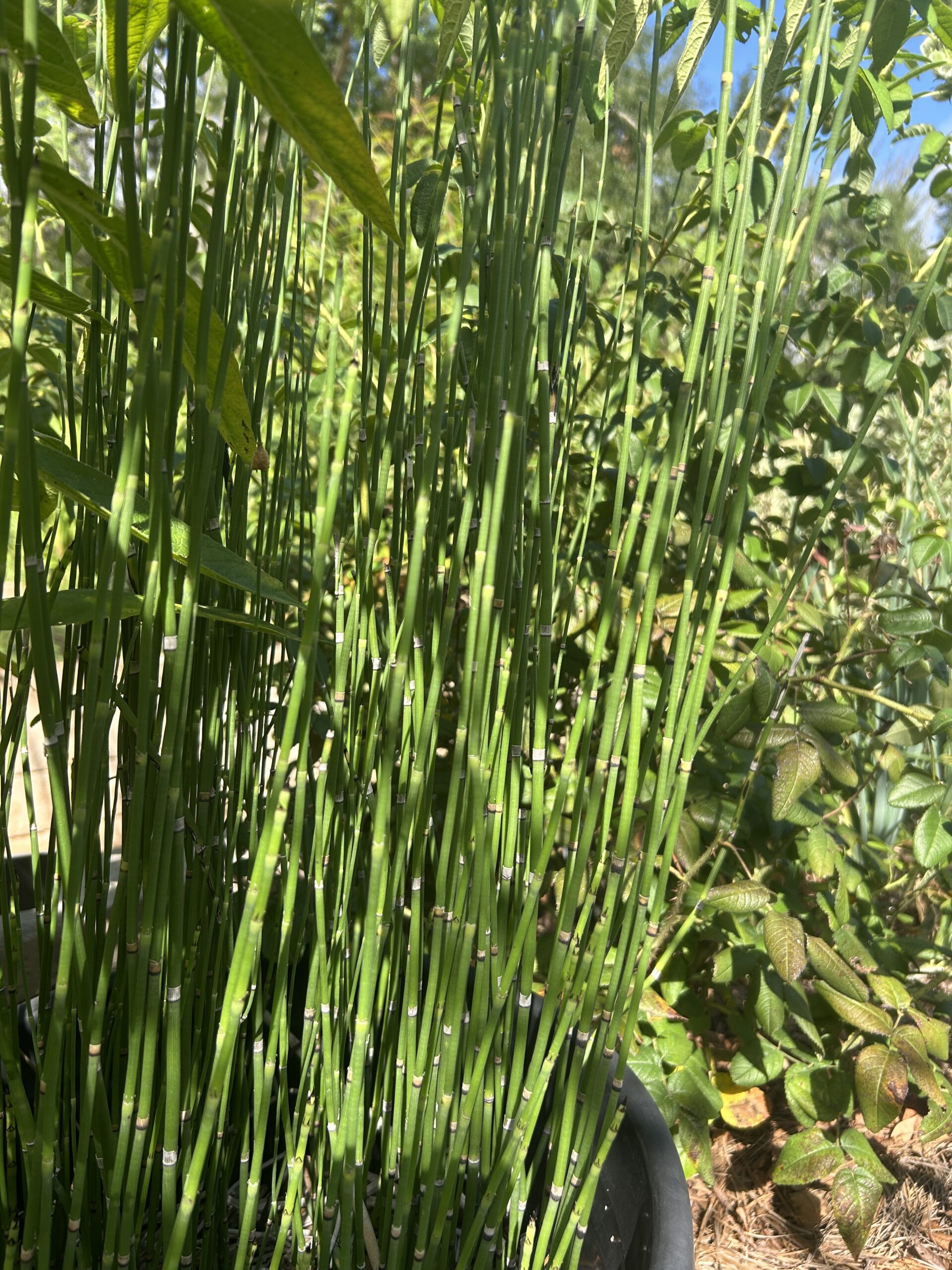
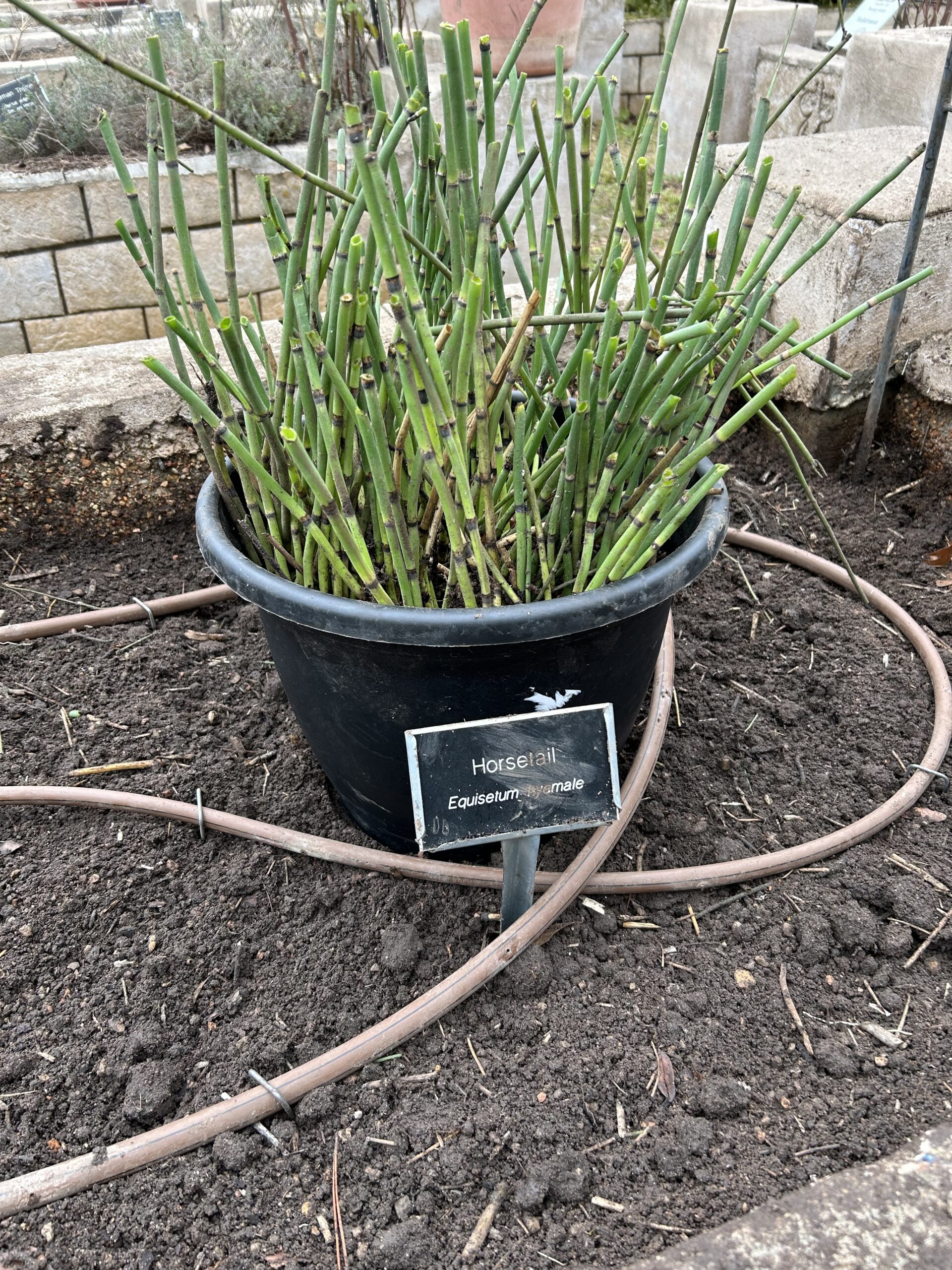
Horsetails are generally thin green, hollow stems, 3-4 feet fall, jointed with siliceous ridges that make it rough to the touch and are easily separated into sections. The horsetails we see above ground rise from nodes growing deep underground called a rhizome. Cutting or pulling the horsetail plants leaves the rhizome; as the rhizomes extend underground they spread, forming clumps of horsetails above. Horsetails also produce spores which are dispersed by the wind that eventually will develop ‘new’ plants.
Cultivation:
Horsetails are quite common. The plant is evergreen except in the coldest climates. It forms colonies in reliably moist habitats, often in heavy clay or sandy soils in zones of rivers & streams, moist forest and woodlands, lake and pond shores, ditches, marshes and swamps. It grows from between sea level to 6,600 feet in elevation.
Control:
The general consensus is that horsetails are invasive and are not well controlled by the usual weeding techniques such as mulching, black plastic, chemicals, hoeing, mowing or pulling. A suggested ‘best solution’ for gardeners seems to be changing the soil chemistry and drainage as horsetails prefer more acidic and moist soils. Eradication is not an easy task. It is probably more effective to prevent horsetail from establishing itself in the first place.
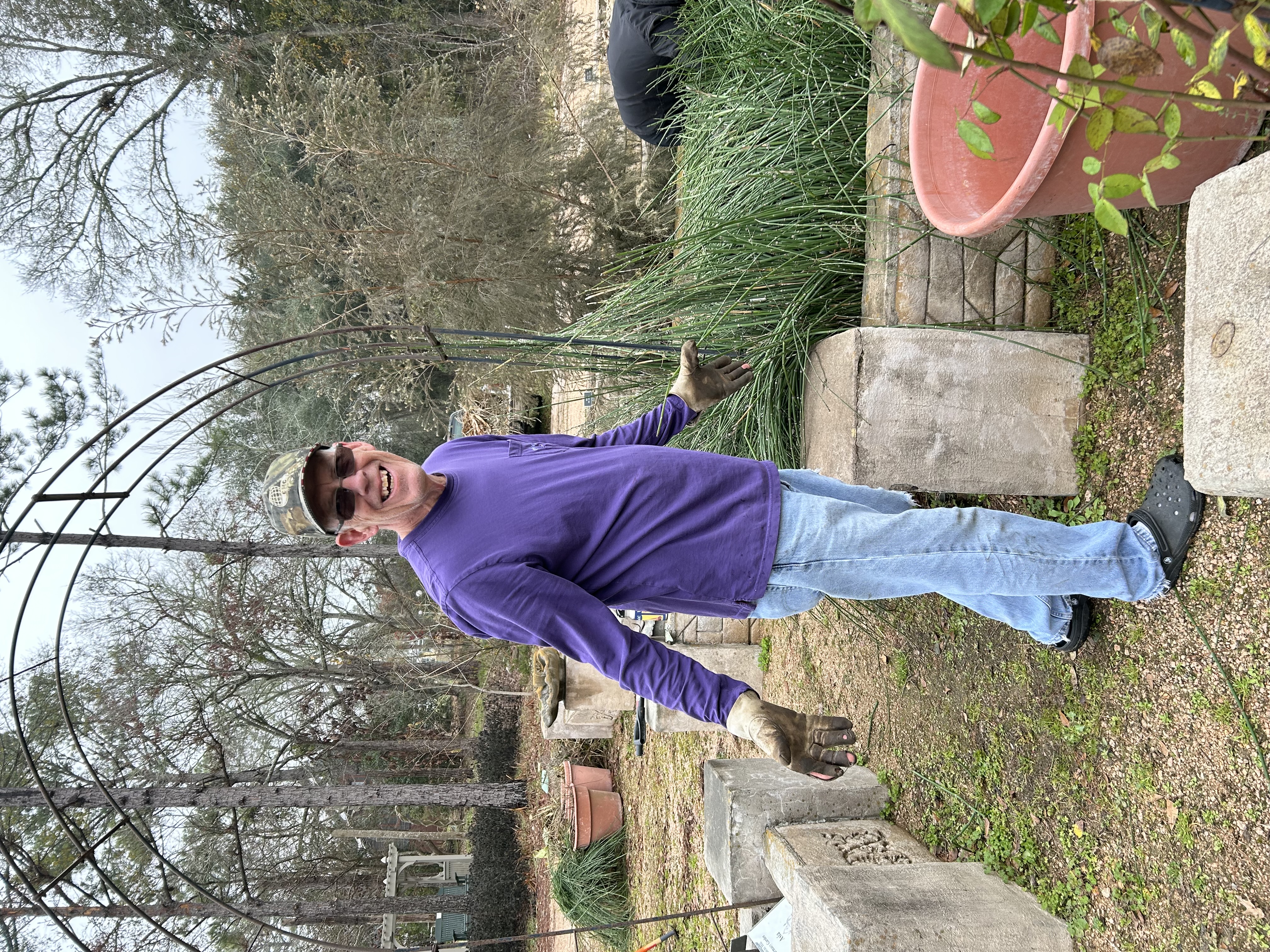
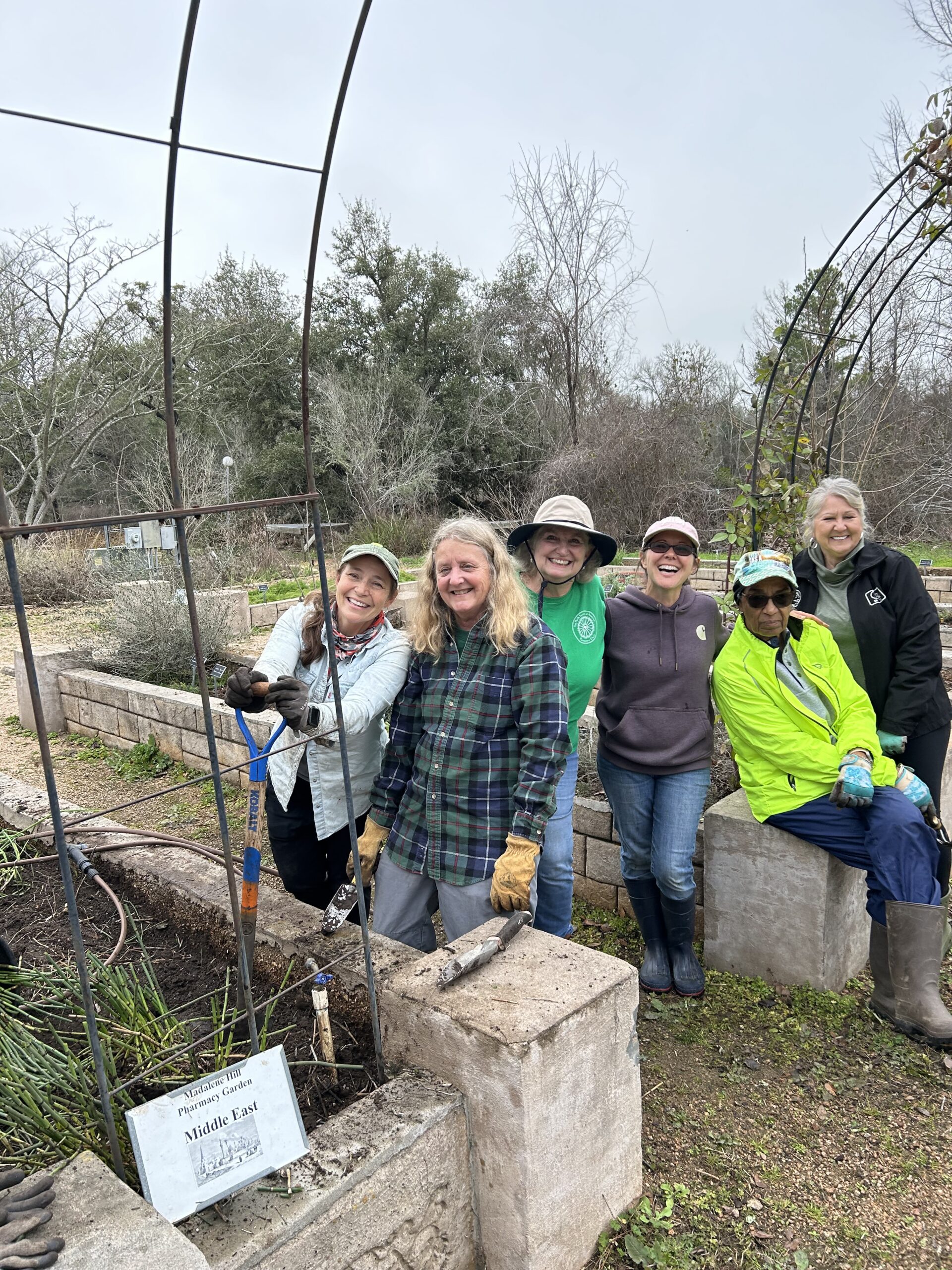
*Our horsetail reed quickly grew to take over our entire Middle Eastern bed here at the Pharmacy Garden. With many friends helping, we yanked and pulled until we managed to corral this plant into a pot, and there it will remain! We continue to pull out new shoots that emerge… careful where you plant this rambunctious wanderer.
Folklore & Traditional Uses:
Native Americans and early settlers used Horsetail to create dyes (yellows/greens/browns/pinks) for clothing, lodges and porcupine quills. The stems, high in silica content, were used by American Indians and early Euro-American settlers for scouring and polishing pots and pans and could be used for sanding wooden objects, like arrow shafts or floor planks. It was used as a cough medicine for horses. (HOWEVER, large quantities of Rough Horsetail can be toxic to grazing animals and humans. In small quantities this plant will not harm people, and the toxicity can be destroyed by heat or thorough drying.) While there’s
evidence of horsetail being used in ancient Greek and Roman medicine, there’s no direct evidence to confirm its presence or use in ancient Egypt. It is possible that it existed in ancient Egypt, but it wasn’t as prominently used or documented as papyrus.
Modern & Medicinal Uses:
As an ornamental plant it is grown in contained garden beds, planters, and pots. Horsetail are used in floral arrangements and decorations. It is a good source of silicon, which may help strengthen bones, and is sometimes recommended as a treatment for osteoporosis. Horsetail has been used around the world for centuries as a hair strengthening herb. Horsetail can be used topically in infused oils or as a spray for skin conditions like varicose veins. It is consumed as a diuretic and for its potential benefits in treating urinary infections, high blood pressure and even for weight management.
In conclusion, while horsetail is available as a dietary supplement, the FDA has not evaluated or approved it for any specific medical uses.
References:
Purdue Extension Weed Science WS-29-W, May 2007, “The Ancient Horsetail”, Glenn Nice,
Peter Sikkema, www.btny.purdue.edu/weedsscience/
Utah State University Extension: extension.usu.edu/rangeplants/forbs-herbaceous
McClung Museum of Natural History & Culture, Plant of the Month, February 2020.
YOU TUBE videos with Horsetail ‘stories’ and uses.
1) “The Walk and Jump of Equisetum hyemale”.
2) “Horsetails by John Feeham, Wildflowers of Offaly Series”, Ireland. With recipe for Horsetail Tea.
3) “Old Ways Gardening”, a folksy western Tennessee woman with recipe for Horsetail Apple Cider Vinegar Hair Rinse.
Return to Middle East Region
Return to Pharmacy Garden
It is the policy of The Herb Society of America, Inc. not to advise or recommend herbs for medicinal or health use.
This information is intended for educational purposes only and should not be considered as a recommendation or an endorsement of any particular medical or health treatment. Please consult a health care provider before pursuing any herbal treatments.