Purple Coneflower, Black Sampson
Botanical Family : Asteraceae
Native to : North America
Researched by : Julia Johnson

Botanical Family:
Asteraceae, the Daisy or Aster Family
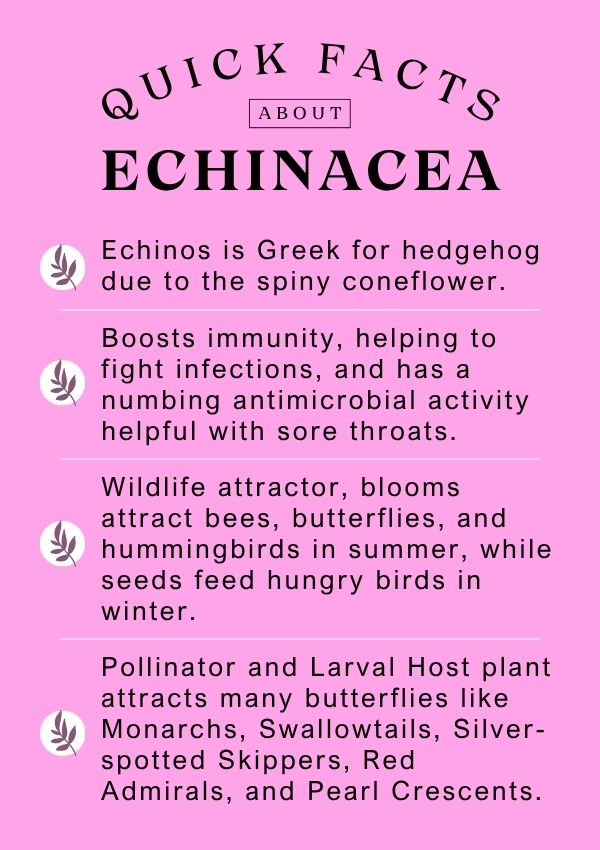
Genus Echinacea is derived from the Greek word echinos for hedgehog or sea-urchin due to the spiny center cone of the flower. The specific epithat purpurea means purple.
Asteraceae is the largest plant family in the world. Other familiar plants in this family include Black-eyed Susan (Rudbeckia), Sunflower (Helianthus), Artichoke (Cynara), Chicory, Yarrow (Achillea), Chamomile (Matricaria), Curry Plant (Helichrysum), Lettuce, and Thistles.
Cultivation:
A North American native, Purple Coneflower blooms best in full sun. It is an herbaceous perennial that can spread 2-4 feet wide and stands about 2 feet tall. Coneflower thrives in hot, dry climates, but does not do well in wet or boggy areas. Overwatering may cause plants to have blackened stems, leaves, or flowers. Hardy in zones 3 through 9, young plants can benefit from a little winter protection. Does well in containers too, place in a sunny spot for the best blooms, and during wet winters move pots to under the eaves of a building so they don’t get too wet during their dormancy.
Leaves : Dark green, narrow, oval shaped leaves are deeply veined.
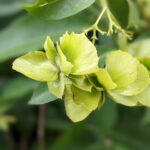
Blooms : Showy daisy-like bright to pale pink or purple blossoms throughout the summer, deadhead to extend bloom time. Cultivars have been developed in an array of colors including red, orange, white, and lemony green. Makes a great cut-flower.
Harvesting : Collect flowers and leaves before the flower loses its petals and the cone is fully formed. For medicinal use, dig up the roots of 3 year old plants in the fall of E. angustifolia, E. purpurea, or E. pallida. These are typically then dried and used for making tinctures. For seed collection, make sure the head is fully dried out.
Note : Over harvesting of wild Echinacea has dramatically decreased its range in native habitats. Be sure to grow your own plants for harvesting and help protect Echinacea in its natural habitats.
Propagation : Divide in the fall after flowering, when clumps become large and overcrowded, every several years. Collect seeds after seedheads are fully dried and stiff, germination is increased by a period of cold stratification for 8-10 weeks. Seedlings develop slowly and may take a year or more before blooming.
Pests & Disease : Generally very healthy, but can be susceptible to damage by Japanese beetles, aphids, or leafhoppers. Snails love the delicate new growth in the spring. Leafhoppers can spread Aster Yellows, which is a systemic disease that causes floral deformities, there is no known cure, so remove and destroy infected plants before the disease can spread to other members of the Aster family.
Folklore & Traditional Uses:
Said to represent strength, resilience, and courage, this herb is also a natural medicine that boosts immunity and promotes healing.
Native American tribes used Echinacea for hundreds of years for everything from snake bites and wounds to respiratory infections. The juice of the plant was added to water that was sprinkled on coals during traditional “sweats” which were purification rituals.
American pharmaceutical companies have created therapeutic anti-infective drugs with Echinacea as far back as 1885, with interesting “snake oil salesmen” like Dr. Meyer, who amazed spectators by getting bit by venomous snakes onstage then curing himself with his Echinacea-derived drug therapies.
However by the 1930s drug companies abandoned Echinacea with the advent of new and more effective anti-infectives.
Modern & Medicinal Uses:
Some herbalists assert that Echinacea angustifolia, not Echinacea purpurea (the plant in our North America bed), has the best medicinal properties and should only be used for those purposes. E. angustifolia is less showy and is a more wild variety that has been largely overharvested. Be sure to source your plants from reputable growers and protect the plants of our wildscapes wherever possible.
Echinacea stimulates the immune system and can help prevent colds and flu, or reduce their severity. Tinctures made from the dried root can treat severe infections, while a decoction made from the root can be used as a gargle to treat sore throats and throat infections. A decoction from the fresh flowers can be used externally to treat skin ailments.
Echinacea roots contain caffeic acid glycoside which interacts with our body’s cells to facilitate wound healing. It boosts white blood cell production, helps cleanse the lymphatic system, and aids in general detoxification. Its numbing and antimicrobial activity makes it useful on wounds, bites, and sore throats. Echinacea inhibits the enzyme hyaluronidase that some pathogens (and venom) use to break into and infect cells.
While it is no longer used in any modern commercial drugs, many herbalists still regard it as one of the best blood purifiers and natural antibiotics.
Dried flower heads make beautiful additions to flower arrangements.
Concerns:
If you are allergic to plants in the Aster family, then you may also be allergic to echinacea.
Also, people suffering from systemic autoimmune disorders should not take this herb without the consultation of their medical staff.
Recipes:
Echinacea & Licorice Root Cough Syrup
Helps to boost the immune system and suppress coughs.
https://mymerrymessylife.com/echinaecia-licorice-and-honey-all-natural-cough-syrup
Ingredients:
½ c Echinacea root
½ c Licorice root
¾ – 1 c Honey (raw is best)
4 c Distilled water
½ Tbs Cinnamon
2 Tbs Fresh ginger root, minced
Instructions:
- Place echinacea, licorice, cinnamon, and ginger into a medium pot with 4 c water. Heat until boiling, then reduce heat and simmer for 45 min. Reduce the liquid by half.
- Separate herbs with cheese cloth or press. Pour into a large jar and let cool until warm.
- Add raw honey, stir to combine.
- Take 1-2 Tbs 2-3 times a day at the first sign of a cold and while symptoms persist.
Echinacea Tea (Tisane)
Echinacea tisane can help boost your immunity and is best consumed during symptoms of a cold.
*Technically this drink is a tisane, or an herbal infusion, only teas made from the plant Camellia sinensis are truly considered “tea.” All teas black, green, white, yellow, pu’er, or oolong come from that plant.
The flavor profile of straight echinacea tisanes are robustly earthy, therefore it is often blended with other true teas (black, green, oolong, white) or flavors like elderberry, ginger, or lemon.
Caution: If you have allergies to ragweed, chrysanthemum, or marigolds you may have allergic reactions to consuming echinacea tea as well. May cause interactions with drugs that suppress the immune system.
Dried root, leaves, or flowers can be used to make tea/tisanes.
Add 1-2 teaspoons of herb mixture to your teapot of boiling water and allow to steep for 10-15 min, pour into a cup and flavor with lemon or honey and enjoy!
Echinacea Throat Spray
https://www.reformationacres.com/homemade-echinacea-throat-spray/
¼ c Echinacea tincture
¼ c Water
2 tsp Sage
½ tsp Propolis
3 drops Peppermint essential oil
Make an herbal infusion by combining the sage and propolis in ¼ c boiling water. Allow to steep for 15 min. Strain the herbs, allow the infusion to cool, add the echinacea tincture and peppermint essential oil. Spray onto the back of the throat to ease discomfort, store in the refrigerator.
Sage is an antispasmodic and expectorant which helps not only with sore throats but also with wet or dry coughs. Propolis is the “glue” bees use to seal unwanted gaps in the hive and is made from saliva, beeswax, and plant resin. It is antioxidant, anti-inflammatory, and antibacterial along with other health benefits and may shorten or prevent a cold.
References:
Groves, Maria Noel. Grow Your Own Herbal Remedies. Storey Publishing, 2019. Book.
Kowalchik & Hylton, Rodale’s Illustrated Encyclopedia of Herbs. Emmaus, Pennsylvania : Rodale Press, 1998. Book.
Iannotti, Marie, “How to Grow… Coneflower”, the Spruce, 7/19/24, https://www.thespruce.com/echinacea-purple-coneflowers-1402840, Accessed on : 6/1/2025.
“Echinacea purpurea”, Missouri Botanical Garden, https://www.missouribotanicalgarden.org/PlantFinder/PlantFinderDetails.aspx?kempercode=c580, Accessed on : 6/1/2025.
“Echinacea, Licorice and Honey… Cough Syrup”, My Merry Messy Life, https://mymerrymessylife.com/echinaecia-licorice-and-honey-all-natural-cough-syrup/, Accessed on : 6/25/25.
“Echinacea species, …”, Garden Experiments, https://www.gardenexperiments.com/echinacea-species-flowering-plants-for-bees-butterflies-and-birds/, Accessed on 6/29/2025.
Return to North America Region
Return to Pharmacy Garden
It is the policy of The Herb Society of America, Inc. not to advise or recommend herbs for medicinal or health use.
This information is intended for educational purposes only and should not be considered as a recommendation or an endorsement of any particular medical or health treatment. Please consult a health care provider before pursuing any herbal treatments.