Bunching Onions
Botanical Family : Amaryllidaceae
Native to : China
Researched by : Jana Rinehart
Botanical Family:
Amaryllidaceae
Bunching onions (Allium fistulosum), also known as scallions, green onions, or spring onions, are non-bulbing onions valued for their long green stalks and mild flavor. Unlike bulb-forming onions (Allium cepa), bunching onions are harvested for their leaves and slender white bases.
Cultivation:
Leaves: Long, hollow, tube-like green stalks
Bulbs: Small or absent—do not form large bulbs like standard onions
Height: 12–24 inches
Flavor: Mild onion taste; less pungent than bulb onions
Hardiness: Cold-tolerant; USDA Zones 3–10
Sun: Full sun
Soil: Loose, well-draining, moderately rich soil
Harvest Time: 60–80 days from seed
Spacing: 1–2 inches apart; plant successively for continuous harvest
Propagation: Seeds or division of clumps
Cultivating bunching onions (also known as scallions, green onions, or Allium fistulosum) is
relatively simple and ideal for home gardeners. These onions are grown for their green stalks and small white bulbs, and they do not form large bulbs like regular onions.
- Choose the Right Variety
Allium fistulosum (true bunching onion): Perennial in mild climates, doesn’t bulb.
Allium cepa (bulbing onion used as green onion): Harvested young for similar use.
Common varieties:
‘White Lisbon’
‘Ishikura’
‘Evergreen Hardy White’ - Ideal Growing Conditions
Sunlight: Full sun (6–8 hours daily).
Soil: Loose, well-drained, fertile soil; enriched with compost or well-rotted manure.
pH: Slightly acidic to neutral (6.0–7.0). - Planting Bunching Onions
From Seeds:
Start indoors 8–10 weeks before last frost, or direct sow outdoors 2–4 weeks before last
frost.
Sow seeds ¼ inch deep, spaced about 1 inch apart in rows 12 inches apart.
Thin seedlings to 2 inches apart when they’re 2–3 inches tall.
From Transplants or Divisions:
Plant seedlings in bunches or single file.
You can also divide mature clumps for perennial growth. - Watering
Keep soil consistently moist but not soggy.
Water at the base to prevent rot and disease. - Maintenance Tips
Mulch to retain moisture and suppress weeds.
Fertilize every few weeks with a balanced fertilizer (like 10-10-10).
Hill soil up around the base to blanch the lower stem (optional for a tender white stalk). - Harvesting
Begin harvesting 60–80 days from seed.
Harvest anytime when plants are 6–12 inches tall.
Cut just above the soil to encourage regrowth if perennial, or pull whole plants. - Perennial Growth (for A. fistulosum)
In warmer climates, bunching onions can regrow for several years.
Divide and replant every 1–2 years to maintain vigor.
Allow a few plants to flower for seeds or to attract pollinators.
Folklore & Traditional Uses:
Ancient Origins
Bunching onions, also known as scallions, green onions, or Welsh onions, originate from Asia, particularly China and Siberia, where they have been cultivated for over 2,000 years. Despite the name, Welsh onion has no connection to Wales; the term “Welsh” in this context derives from an old Germanic word meaning “foreign.”
Ancient Use
In ancient China, bunching onions were a staple in the diet and medicine cabinet. They were mentioned in classical Chinese herbal texts for their warming and detoxifying properties. The herb spread early to Japan and Korea, where it became essential in cooking and traditional medicine. In Japan, bunching onions are called negi and are still widely used today.
Spread to the West
Through trade routes and migration, bunching onions reached Europe and eventually North America. They became popular among settlers due to their hardy nature, ease of cultivation, and usefulness in the kitchen year-round.
Today, Allium fistulosum is cultivated globally
Widely grown in Asia, especially China, Japan, and Korea, for culinary and cultural significance. Also popular in North America and Europe, where they are used both in commercial agriculture and home gardening.
Cultural Significance
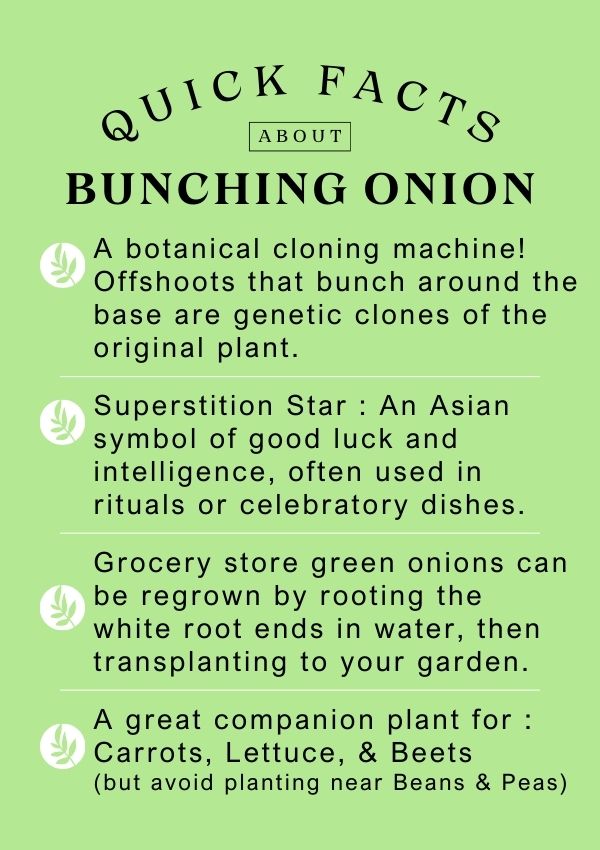
In Chinese culture, scallions symbolize intelligence and are often associated with cleverness in proverbs and idioms.
In Korean cuisine, green onions are a key ingredient in dishes like pajeon (scallion pancakes) and pa kimchi (scallion kimchi).
In Japanese cuisine, they are used in miso soup, ramen, and many other dishes.
Modern & Medicinal Uses:
Modern Uses
- Culinary & Nutritional Use
Common in cuisines worldwide, especially in Asian, Mexican, and Mediterranean dishes.
Used raw or cooked for a mild onion flavor.
Entire plant is edible—white stalk and green tops.
Easy to grow and harvest in home gardens year-round. - Functional Food
Considered a nutrient-dense food, rich in:
Vitamin K (supports blood clotting & bone health)
Vitamin C (boosts immunity)
Folate (important for cell health)
Antioxidants (such as flavonoids and quercetin)
Medical and Health-Related Uses (Evidence-Based)
- Antimicrobial Properties
Contains organosulfur compounds like allicin that exhibit antibacterial and antifungal
effects.
Shown in lab studies to inhibit bacteria such as E. coli and Staphylococcus aureus. - Cardiovascular Health
Sulfur compounds and quercetin may help:
Lower blood pressure
Reduce cholesterol
Prevent blood clot formation
Promote overall vascular health - Anti-inflammatory and Antioxidant Effects
High in antioxidants, which may:
Protect against chronic inflammation
Reduce oxidative stress linked to aging and disease - Digestive & Metabolic Benefits
Acts as a natural prebiotic (feeds good gut bacteria)
May help improve digestion and support blood sugar regulation - Immune Support
Vitamin C, sulfur compounds, and flavonoids help stimulate immune defenses.
Traditionally used to treat common colds, coughs, and nasal congestion in East Asian medicine.
Traditional Medicine Use (Still Relevant Today)
In Traditional Chinese and Japanese Medicine:
Used as a mild diaphoretic (to induce sweating) during early stages of colds.
Often combined with ginger in teas or soups to clear congestion and boost circulation.
Precautions
Generally safe when eaten in normal amounts.
People with onion allergies or sensitivities may need to avoid.
Large amounts of raw alliums (like scallions or garlic) may cause GI discomfort in some
individuals.
Recipes:
Bunching Onion Miso Soup
Ingredients:
3 cups dashi or vegetable broth
2 Tbsp miso paste
½ block tofu, cubed
½ cup chopped bunching onions
Optional: wakame (seaweed)
Instructions:
Add bunching onions just before serving.
Bring broth to a simmer, add tofu and wakame.
Dissolve miso paste in a ladleful of broth, stir in.
Bunching Onion Vinaigrette
(Salad Dressing)
Ingredients:
½ cup chopped green onion tops
¼ cup olive oil
2 Tbsp rice vinegar or lemon juice
1 tsp honey
Salt and pepper
Instructions:
Use as a dressing for green salads or drizzle over roasted veggies.
Blend all ingredients until smooth.
Quick-Pickled Bunching Onions
(Refrigerator Style)
Ingredients:
1 bunch bunching onions (a.k.a. green onions or scallions), trimmed
¾ cup white vinegar (or apple cider vinegar)
¾ cup water
1 Tbsp sugar (adjust to taste)
1 tsp salt
Optional add-ins:
2 garlic cloves (sliced)
½ tsp mustard seeds or black peppercorns
Pinch of red pepper flakes (for heat)
1 small bay leaf
Instructions:
- Prep the Onions
Wash and trim roots and tough tips.
Cut into lengths that fit your jar (or slice thinly if preferred). - Make the Brine
In a saucepan, combine vinegar, water, sugar, and salt.
Bring to a simmer, stirring to dissolve sugar and salt.
Remove from heat. - Pack the Jar
Place the onions into a clean pint-size glass jar.
Add garlic, peppercorns, chili flakes, or herbs if using. - Pour Brine Over Onions
Carefully pour hot brine into the jar, covering onions fully.
Tap jar gently to release air bubbles and seal with a lid. - Cool and Refrigerate
Let cool to room temperature, then refrigerate.
Wait at least 2–4 hours before using; best after 1–2 days.
Keeps up to 2 weeks in the refrigerator.
Fermented Bunching Onions Recipe
Ingredients:
1 bunch bunching onions (green onions/scallions), washed and trimmed
2% brine solution: about 20 grams (1 tablespoon + 1 teaspoon) non-iodized salt per 1 liter (4 cups) water
Optional spices:
1 garlic clove (smashed)
1 tsp mustard seeds or peppercorns
A small piece of dried chili (if you like heat)
Equipment:
Clean glass jar (pint size or larger)
Weight to keep onions submerged (a small glass or fermentation weight)
Cloth or lid (for airlock or loose cover)
Instructions:
- Prepare the Brine:
Dissolve salt in water to make a 2% brine. - Prepare the Onions:
Trim roots and tough ends. You can keep the bunching onions whole if small, or cut into
2–3 inch lengths. - Pack the Jar:
Place the onions vertically or loosely packed into the jar. Add garlic and spices if using. - Add Brine:
Pour the brine over the onions, making sure they are completely submerged. Use a fermentation weight or a clean small jar to keep them under the brine to prevent mold. - Cover the Jar:
Cover loosely with a cloth or use an airlock lid to allow gases to escape. - Ferment:
Keep the jar at room temperature (~65–75°F or 18–24°C) for 5–10 days. Check daily to ensure onions stay submerged and skim any surface yeast or mold (which is harmless but should be removed). - Taste Test:
Start tasting after 3–5 days. When flavor is pleasantly tangy and slightly sour, transfer to the fridge to slow fermentation. - Storage:
Store fermented onions in the refrigerator for several weeks. Flavor will continue to develop slowly.
Serving Ideas:
Use as a tangy condiment on sandwiches, tacos, or grilled meats
Chop into salads or grain bowls
Add to stir-fries for a probiotic boost
References:
Anderson, E. N. Everyone Eats: Understanding Food and Culture. New York University Press, 2014.
Chevallier, Andrew. The Encyclopedia of Medicinal Plants. DK Publishing, 1996.
Duke and Brielmann. Handbook of Medicinal Herbs. Friedman Publishing, 2009.
Mazza, Giuseppe. Vegetables: Nutritional and Therapeutic Values. CRC Prtess, 2010.
Return to Simples & Good Health Region
Return to Pharmacy Garden
It is the policy of The Herb Society of America, Inc. not to advise or recommend herbs for medicinal or health use.
This information is intended for educational purposes only and should not be considered as a recommendation or an endorsement of any particular medical or health treatment. Please consult a health care provider before pursuing any herbal treatments.