Greater Galangal, Siamese Ginger
Botanical Family : Zingiberaceae
Native to : Southeast Asia
Researched by : Ann Wilson
Botanical Family:
Zingiberaceae, the Ginger Family
Worldwide the genus Alpinia has about 200 different species.
Lessor galangal is Alpinia officinarum. In general A. officinarum, whose root is called Gao Liang Jian in Traditional Chinese Medicine, is considered to be more medicinal and is used in Ayurvedic and Chinese Medicine while A. galanga has a less pungent flavor and is used more in cooking, especially in Indonesian, Malaysian and Thai dishes.
Both greater and lesser galangals are used as flavorings for bitters and liqueurs.
Cultivation:
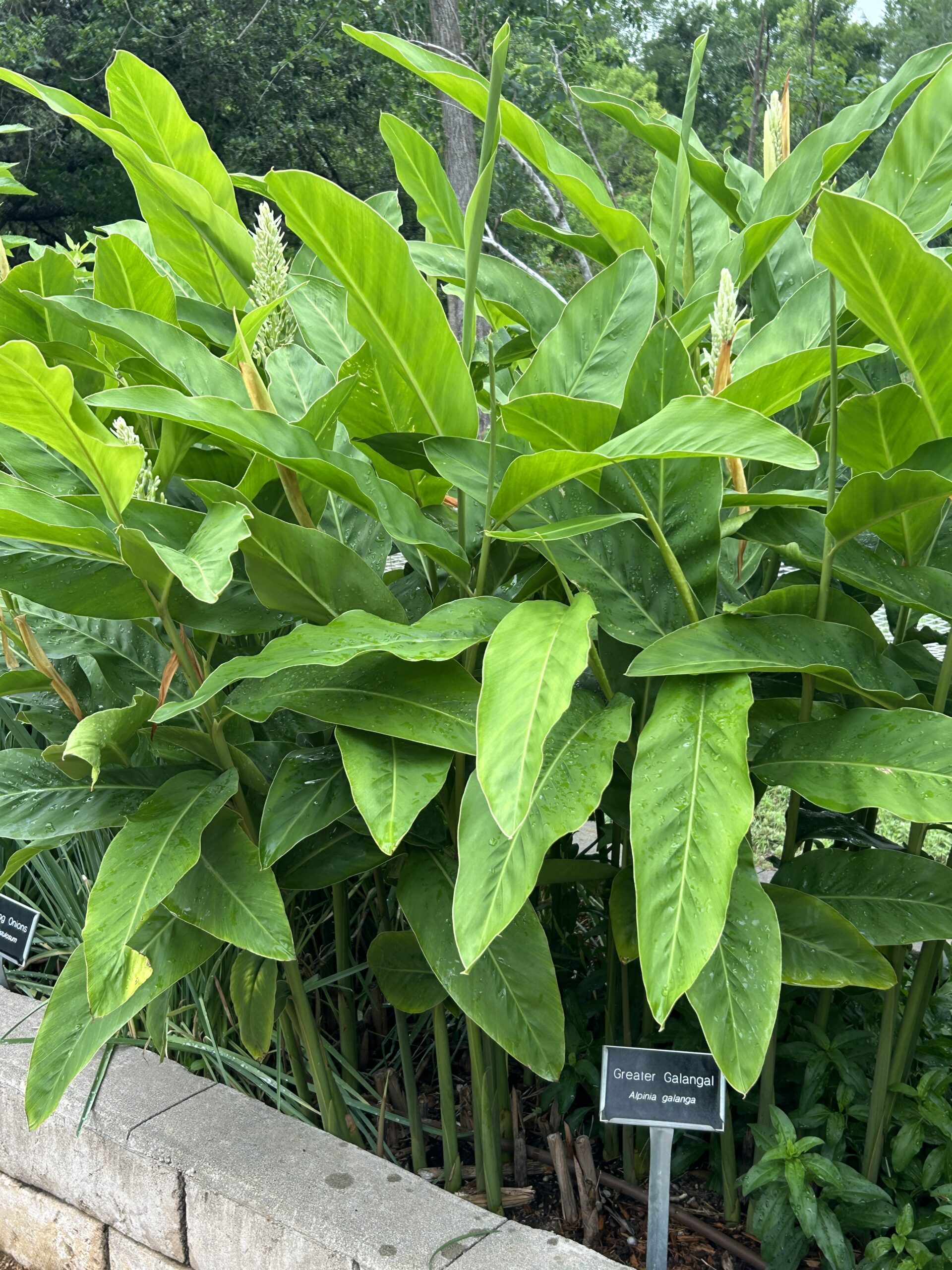
Growth Habit: Perennial growing to 6 ft tall.
Leaves: Ginger scented, lanceolate to 20 inches long.
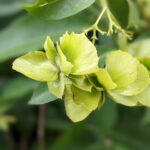
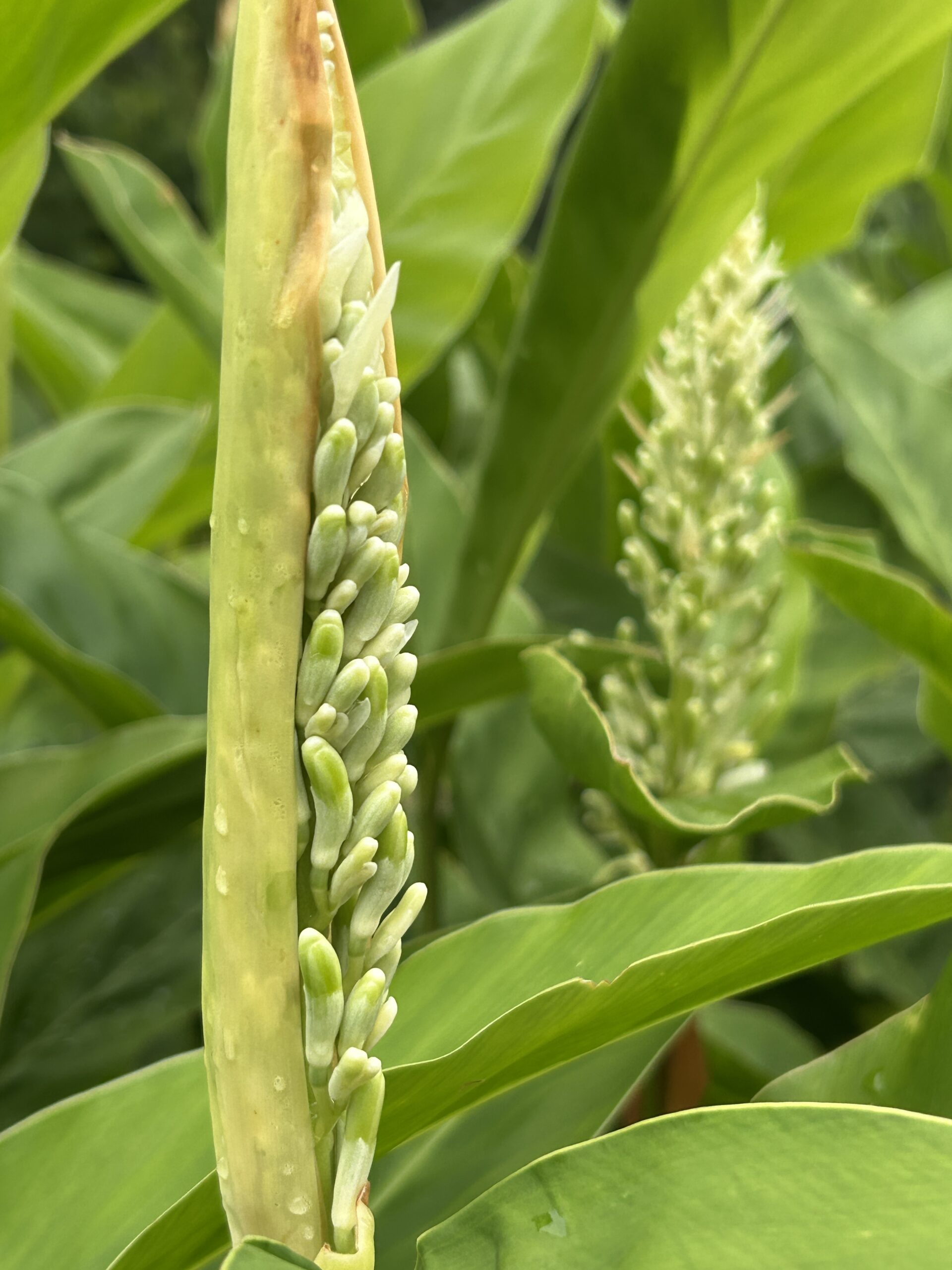
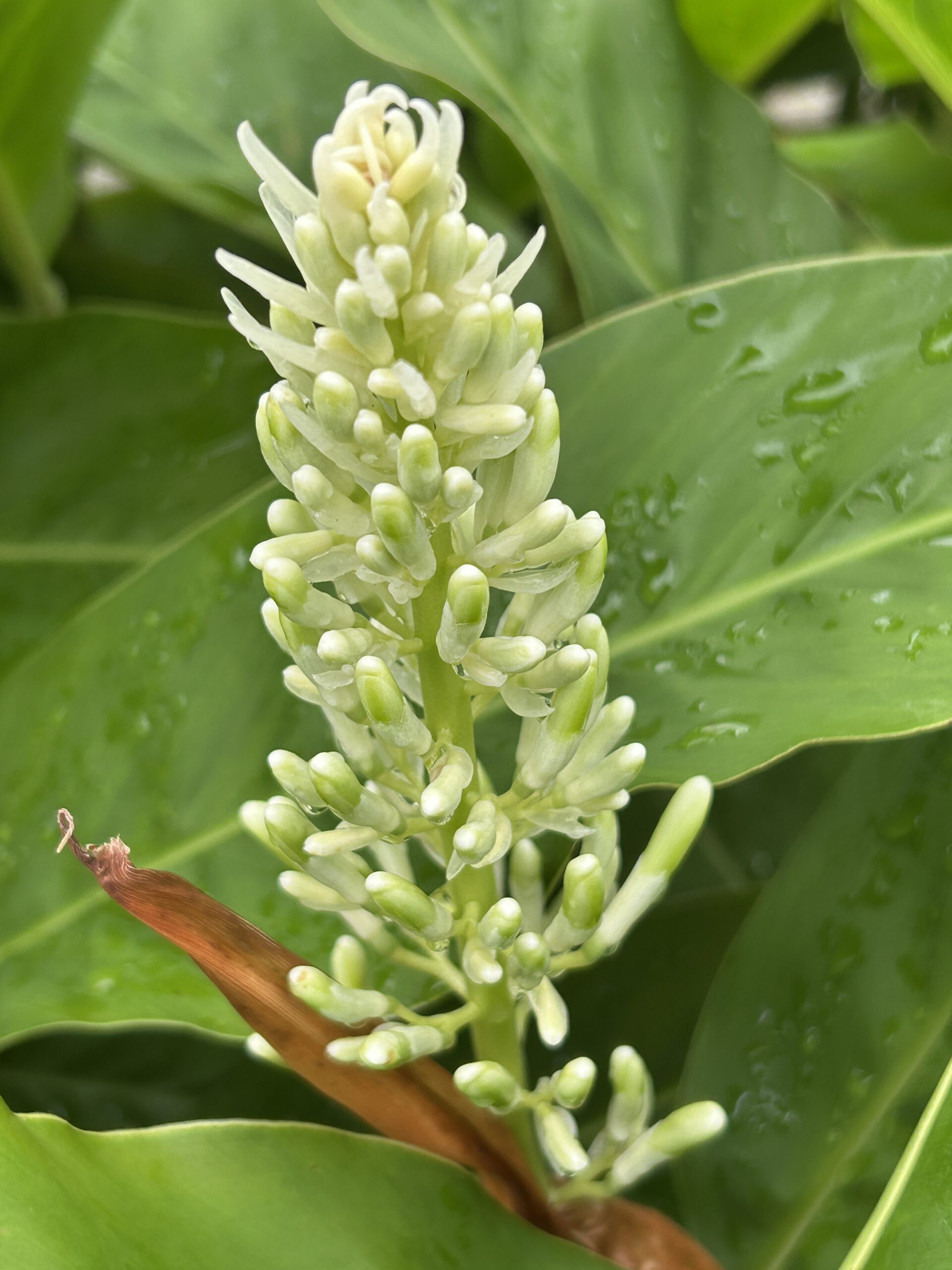
Blooms: Orchidlike, pale green with white lip with pink stripes, flowers and buds are edible.
Seeds: Contained in red, three-part spherical capsule.
Roots: Ginger scented, large, knobby rhizome with orangish red skin, with pale yellow or white inside.
Harvest: Dig rhizomes when four to six years old and use fresh or dried.
Pests: It is susceptible to spider mite. Propagate it by rhizome division.
Sources describe galangal as hardy to 59-64°F, it is hardy in the pharmacy garden but will die back to the ground in freezes, sprouting again in the spring. Galangal grows best in well drained, rich soil and partial shade. It needs ample, regular watering during the growing season.
Folklore & Traditional Uses:
Although galangal (both greater and lesser forms) rhizome was known to have been used in Ancient Egypt as a fumigant and was grown in British and European monastery gardens during the Middle Ages for flavoring and medicinal uses, it is mainly used in Southeast Asian communities today. There are records of A. officinarum being used in China as far back as AD 500.
Modern & Medicinal Uses:
Most references are referring to A. officinarum rhizome (Lesser Galangal) when discussing medicinal uses. It was and may currently be used for stimulation of the digestive system, pain relief, fever, respiratory complaints such as bronchitis and asthma, topically for skin cancer and as an anti-infective agent in wound treatment. In Chinese Medicine it is used for spleen and stomach pain exhibiting “cold signs” of vomiting, pain and diarrhea and for immobile masses associated with “cold signs”. Refer to the Michael Tierra’a The Way of Chinese Herbs for a discussion of Traditional Chinese Medicine.
There is recent in vitro research testing greater galangal for antimicrobial activity against bacteria that cause acne, for anti-ageing effects, and for activity against breast cancer cells. These areas of study suggest potential usefulness of galangal but much more research needs to be completed.
Recipes:
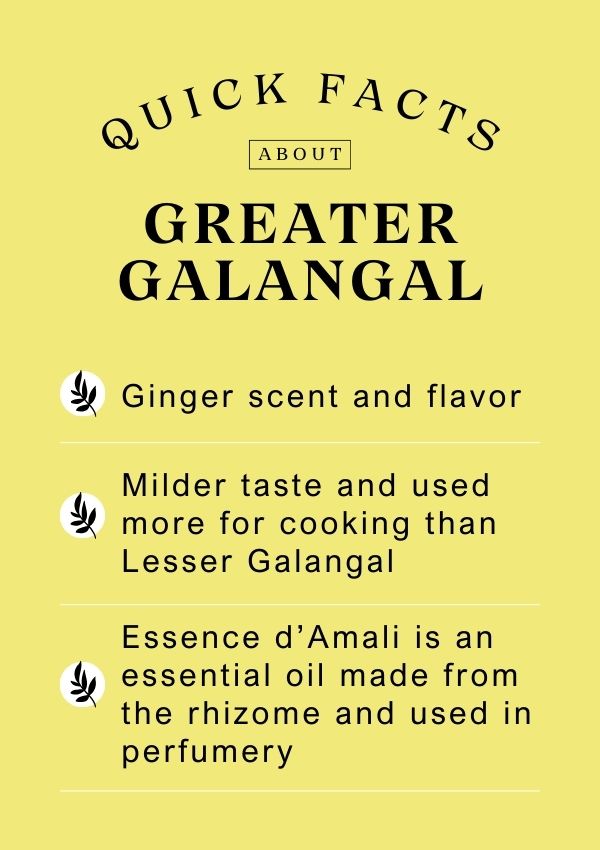
Galangal rhizome is often used in Asian recipes. Flavor wise, greater galangal is described as a mixture of ginger and pepper with a citrus like note while lesser galangal is considered more pungent having a flavor similar to ginger with an added hint of eucalyptus. Both types are used in many Malaysian and Indonesian recipes and greater galangal is often used in Thai cooking in preference to ginger.
A number of recipes can be found in Spices – A Practical Guide to Spices and Aromatic Seeds by Jill Norman.
References:
American Botanical Council Herb Clip. October 14, 2011. Lao Traditional Plant Use in Pregnancy,
Childbirth, and Postpartum Recovery. (Accessed July 29, 2025)
Ahlina FN, Nugraheni N, Salsabila IA, Haryanti S, Da’i M, Meiyanto E. Revealing the Reversal Effect of
Galangal (Alpinia galanga L.) Extract Against Oxidative Stress in Metastatic Breast Cancer Cells and
Normal Fibroblast Cells Intended as a Co- Chemotherapeutic and Anti-Ageing Agent. Asian Pac J Cancer
Prev. 2020 Jan 1;21(1):107-117. doi: 10.31557/APJCP.2020.21.1.107. PMID: 31983172; PMCID:
PMC7294026. https://pmc.ncbi.nlm.nih.gov/articles/PMC7294026/ (Accessed July 29, 2025)
Bown, Deni. The Herb Society of America New Encyclopedia of Herbs and Their Uses. 2001. Dorling
Kindersley. London.
Lewis, Walter H and Memory P.F. Elvin-Lewis. Medical Botany. 2003. John Wiley & Sons, Inc. Hoboken,
New Jersey.
Na Nongkhai, T., Maddocks, S. E., Phosri, S., Sangthong, S., Pintathong, P., Chaiwut, P., Chandarajoti, K.,
Nahar, L., Sarker, S. D., & Theansungnoen, T. (2024).
In Vitro Cytotoxicity and Antimicrobial Activity against Acne-Causing Bacteria and Phytochemical Analysis of Galangal (Alpinia galanga) and Bitter Ginger (Zingiber zerumbet) Extracts. International Journal of Molecular Sciences, 25(20), 10869. https://doi.org/10.3390/ijms252010 (Accessed July 29, 2025)
Norman, Jill. 1990. Spices – A Practical Guide to Spices and Aromatic Seeds. Dorling Kindersley. London.
Tierra, Michael. 1998. The Way of Chinese Herbs. Pocket Books. New York.
Return to India
Return to Simples & Good Health
Return to Pharmacy Garden
It is the policy of The Herb Society of America, Inc. not to advise or recommend herbs for medicinal or health use.
This information is intended for educational purposes only and should not be considered as a recommendation or an endorsement of any particular medical or health treatment. Please consult a health care provider before pursuing any herbal treatments.