Habak Mint, Bible Mint, Arabian Mint, Desert Mint, Horsemint
Botanical Family : Lamiaceae
Native to : Mediterranean
Researched by : Phoebe Lake

Botanical Family:
Lamiaceae (formerly Labiatae)
This plant family consists of over 200 genera including basil, mints, oregano, rosemary, sage, and lavender.
Cultivation:
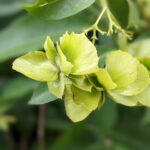
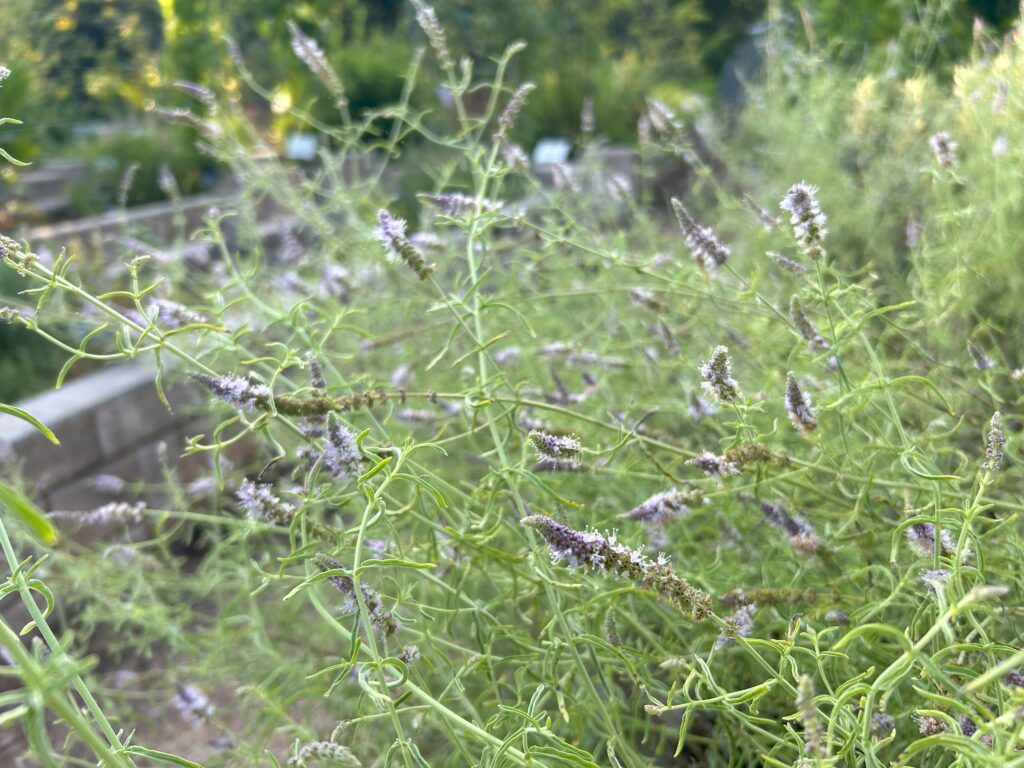
Like most mints, Habak is a hardy perennial that spreads via underground rhizomes, so best grown in a container. It is native to the Mediterranean, although now found throughout much of the world, and grows 2-4’ tall. Longifolia means long leaves. The leaves of this mint are long, thin, and grey/green, distinguishing it from other, more common mints. The delicate flowers are white or lavender and very attractive to pollinators.
Folklore & Traditional Uses:
In Greek mythology, Menthe was the nymph much adored by Hades. Persephone, Hades wife, became so jealous that she changed Menthe into a lowly plant. Hades was unable to reverse the spell, but gifted Menthe with a sweet smell. According to Madelene Hill, “a sad ending for Menthe, but good news for us mere mortals.”
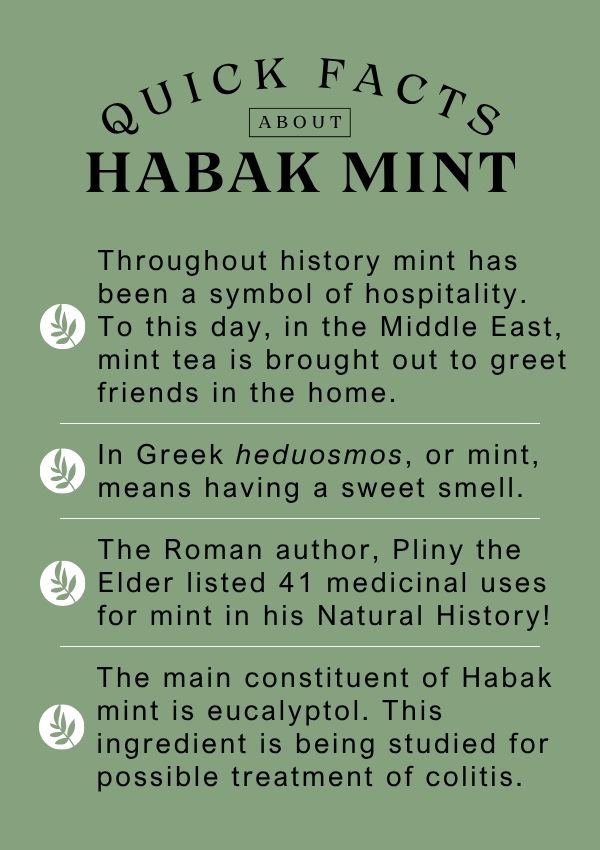
The aromatic qualities of mint are well known. Through the centuries, mint has played an important role in many cultures, from the Greeks, who rubbed mint leaves on their tables to welcome guests, to India, where it was strewn around temples and homes to clean the air.
Also known as Bible mint because of the references in Matthew 23:23 and Luke 11:42 “But woe to you, Pharisees! For you tithe mint and rue and herbs of all kinds, and neglect justice and the love of God.” It is believed to be the specific mint used as tithes, or the payment for taxes.
Medicinally, it has long been used for respiratory and gastro intestinal issues. In addition, mint has been used to treat skin ailments, as an antiseptic, and pain reliever.
Modern & Medicinal Uses:
Habak mint continues to be made into a tisane (herbal tea). The leaves are harvested just before the plant flowers and can be used fresh or dried. Habak tea has traditionally been used in the treatment of fevers, headaches, digestive disorders and various minor ailments. See recipe below.
Recipes:
Habak Mint Tea
To make the syrup add ½ c sugar to ½ c water along with 1 tsp lemon juice.
Bring to boil until sugar dissolves, then allow to cool.
Meanwhile, add ¼ c Habak mint leaves and 2 teabags to 4 cups boiling water.
Cool and add sugar syrup.
Serve iced as a refreshing drink.
From MEEMS Gourmet Kitchen YouTube.
References:
https://mountainvalleygrowers.com/organic-plants/mentha-longifolia-habek-mint/ Musselman, Lytton John. Figs, Dates, Laurel and Myrrh, Plants of the Bible and the Quran: Timber Press, 2007.
Duke, James A. Herbs of the Bible:Interweave Press, 2007.
Hill, Madelene and Barclay, Gwen. Southern Herb Growing: Shearer Publishing, 1987.
“M” is for Mint
Return to Middle East Region
Return to Pharmacy Garden
It is the policy of The Herb Society of America, Inc. not to advise or recommend herbs for medicinal or health use.
This information is intended for educational purposes only and should not be considered as a recommendation or an endorsement of any particular medical or health treatment. Please consult a health care provider before pursuing any herbal treatments.